What is pastry cream?
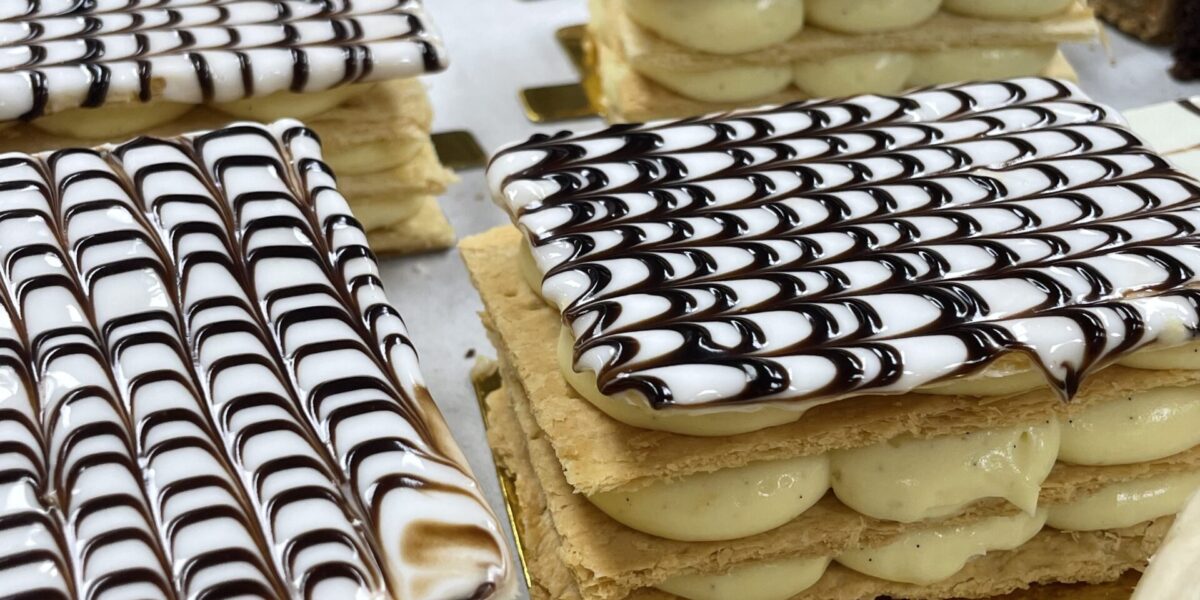
Pastry cream is a delicious and classic custard used as a filling for a wide variety of desserts. Including fruit tarts, éclairs, cream puffs, Napoleons, and Boston cream pies! It also makes a wonderful filling inside of donuts. I personally wouldn’t judge you if you ate it out of a bowl like pudding! It’s that good – I promise! A lot of the time if you bite into a cream puff or éclair the pastry cream will run right out, making it a rather messy treat to eat. However, pastry cream should have more body to it.
My pastry cream recipe will walk you through how to get a good jiggle to your cream. It’s all in the timing when you complete the final steps in the process. Step 14 is where your timing will determine how thick your cream is. In my experience the perfect timing is hard to master. So don’t feel disappointed if your pastry cream is a little thick or a little runny the first couple of times! Especially because it will still be delicious! And for the most part you can trouble shoot your cream to fix thickness issues.
What if my pastry cream is too thin??
If you’re worried your cream is too thin make sure to give it a proper 24 hour chill time. Then reassess the next day. If it is still too thin for the recipe you had in mind, you can turn your pastry cream into a Bavarian cream! Don’t worry this is more simple than it sounds. A Bavarian cream is simply a mixture of pastry cream and whipped cream. Using your stand mixer you’ll want to make a simple whipped cream using: heavy cream, powdered sugar, and vanilla. I like to add a small amount of cream cheese or mascarpone into my mixer first, and gently paddle it before adding my heavy cream and whisking all together. But that’s completely unnecessary. All it does is add a bit more stability to your whipped cream.
Once you have your whipped cream, however you’ve chosen to make it, you’ll slowly pour your thin pastry cream into the stand mixer while on low. To ensure you don’t over whip your cream begin this addition while your whipped cream is still coming together. Then mix until you have a more desirable thickness. Now you have a delicious Bavarian cream which can be used interchangeably with pastry cream.
What if my pastry cream is too thick?
Once your pastry cream has been properly chilled, if you’re worried that it is too thick or even slightly lumpy here’s how to trouble shoot it! First off if you see lots of lumps this could be a result of improperly tempering your egg yolk mixture. My first suggestion would be to scoop out any large lumps and simply discard them. After you’ve done that then place the pastry cream into your stand mixture, and paddle it on medium low until it becomes smooth.
For the most part an overly thick pastry cream just needs a good paddle to become a proper thickness again. However, if yours seems particularly thick then add a tablespoon at a time of either milk or heavy cream. You don’t want to add too much at once or you’ll risk it becoming too thin. So do this carefully and slowly.
I’m unsure if my thickness is correct?
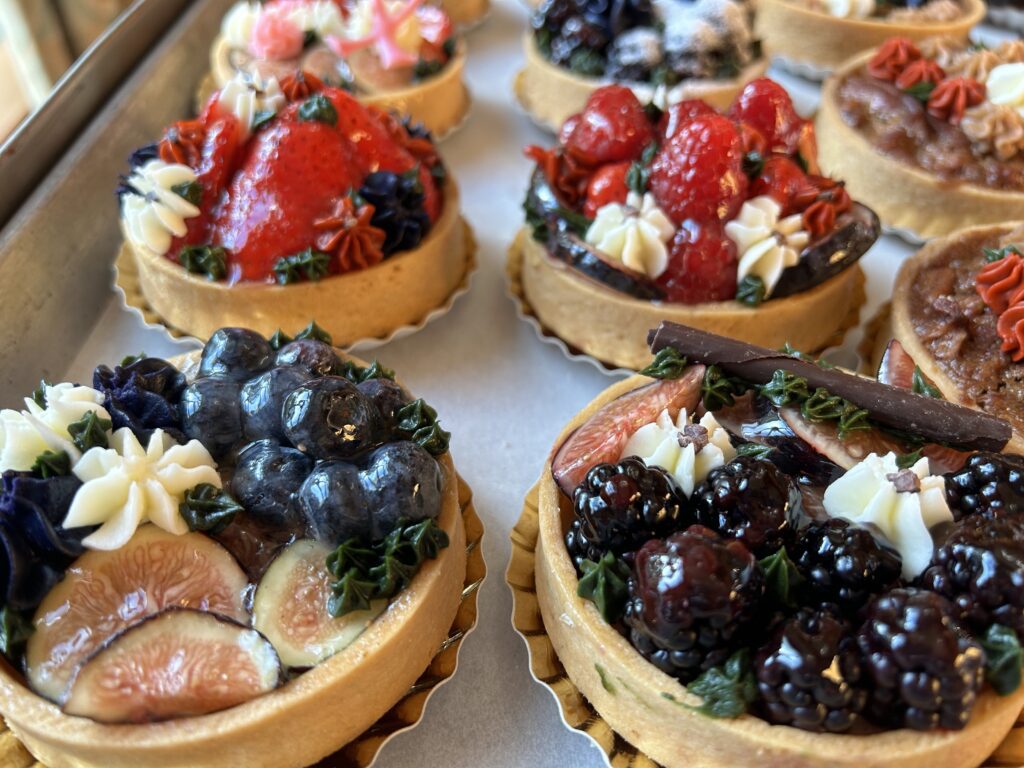
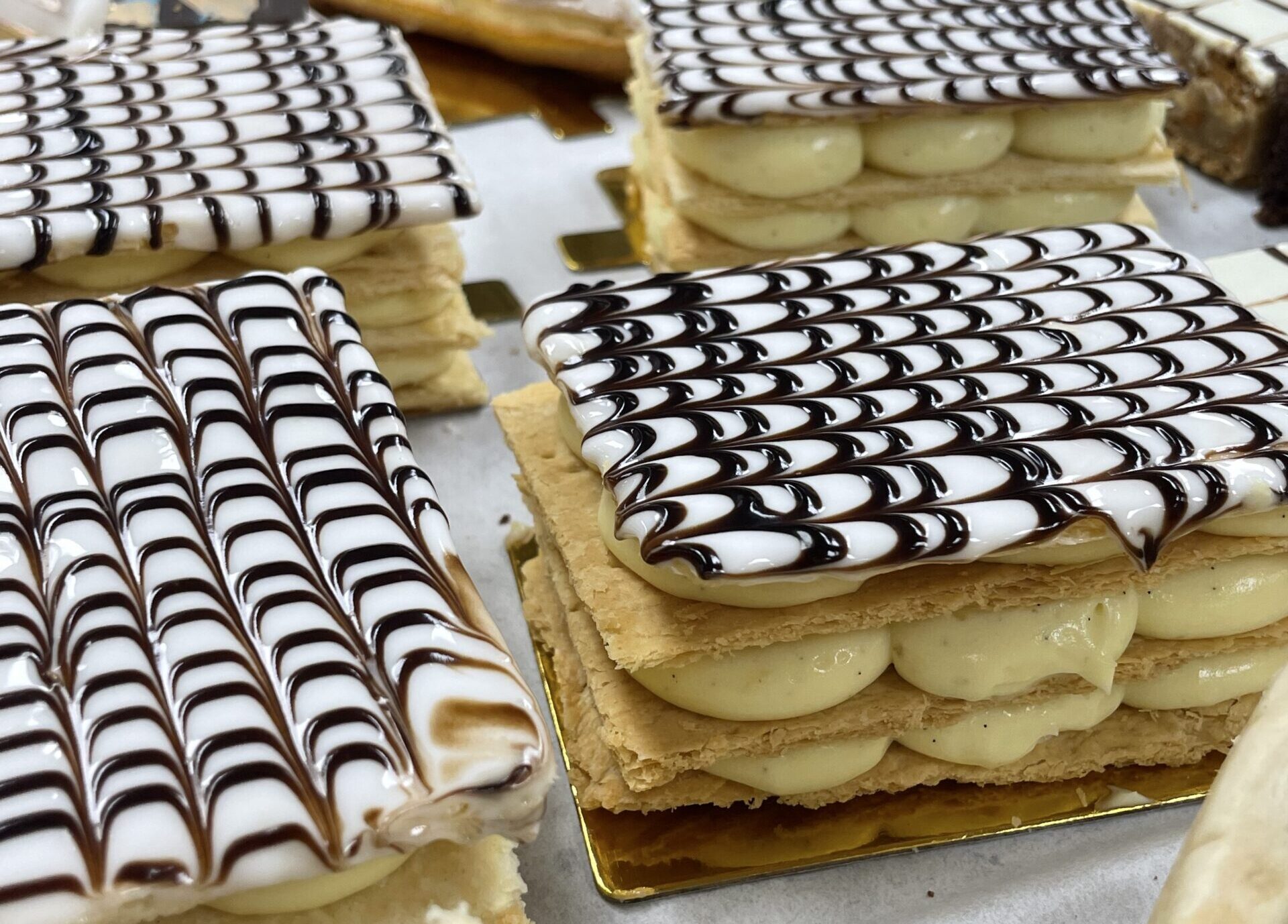
If you are unsure about the thickness of your cream here is a simple test to check. Take a spoon and dip it into your pastry cream, then run your finger down the center, through the cream. The goal is that the cream does not begin to recombine right away. If it starts to sink back together its too thin. On the other hand if it is so thick that you can’t drag your finger through it, then it is too thick. It should have a good solid pudding like consistency and jiggle to it. In my recipe picture you can see that my cream was thick enough to be piped and hold its shape, but still thin enough that it’s shiny and smooth.
I want to try this recipe out, but I want to use it in a simple dessert…
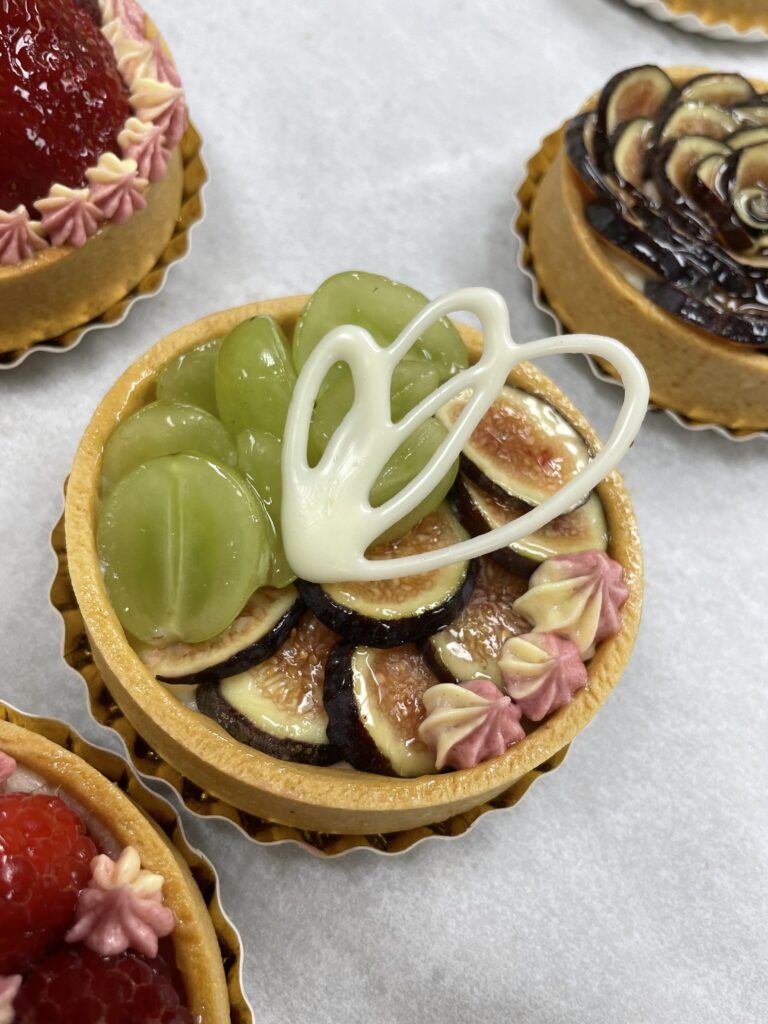
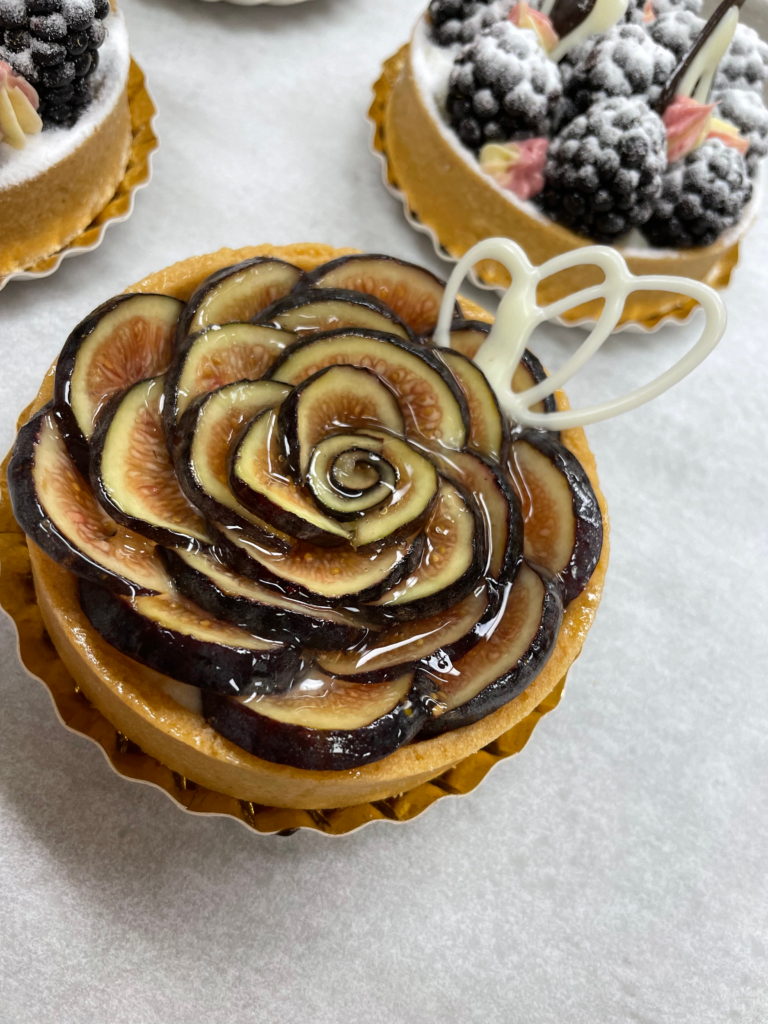
Does this sound like a yummy treat to make but you don’t want to also make an intricate dessert? Aim for a fruit tart! All you will need is a store bought tart shell or pre-made pie crust, your favorite fruit or berries, and some powdered sugar.
Yes there is a more intricate way to make a fruit tart, but if your goal is easy and delicious then this is perfect.
First fill the pre-made shell with your pastry cream.
Next take your berries, if using strawberries I recommend slicing them, and decorate your tart. You can go simple and just stack the fruit or get fancy with it and make a cute design out of the berries. Either way it will be perfect.
Lastly take a sifter and dust your tart with powdered sugar! If you don’t have a sifter you can either skip this part, or take a spoon and scoop up a small amount of powdered sugar and very lightly tap the side, giving the fruit a small dusting of sugar over the top.
Now you have a dessert that will wow everyone!

Pastry Cream
Ingredients
Equipment
Method
- *When using a digital scale always 'tare' out the weight after placing your equipment on it and before you begin to add your ingredient. Then tare out the scale again before adding in the following ingredient. Otherwise you'll have to do a bit of math. Check notes for more info.*
- Place your medium pot onto the digital scale and press tare to zero out the weight. Then weight out the milk directly into the pot.
- If using whole vanilla beans, be very careful on this step! A more detailed instruction will be included in the blog above. Cut your vanilla bean down the center, lengthwise, and carefully scrape out the insides. Then place the scrapings into your pot with the milk. Also toss in the bean "skin" as this will infuse with the milk adding more flavor.If you're using vanilla extract or vanilla paste instead, add that into the milk now.
- Add a literal pinch of salt into your milk mixture.
- Place your large bowl onto the digital scale and tare it out to zero, then one at a time add your egg yolk, sugar, and cornstarch. Make sure to tare out your scale after every added ingredient.
- Gently stir together this mixture, as the cornstarch will fly into the air if you mix too aggressively.
- Using your small bowl scale out your butter and either cut butter into chunks or rip it apart with your hands. Save for later.
- Place your pot with the milk mixture onto the stove and bring to a boil. MILK BOILS OVER QUICKLY. So keep an eye on your pot, and once you notice that the milk is beginning to simmer do NOT take your eyes off of the pot. The moment the milk begins to boil turn off the heat and remove the pot from the stove.
- This next step is where you will temper your egg yolk mixture. Which is very important to ensure a smooth pastry cream. Place your metal strainer over your large bowl.With your 1/2 cup measuring cup scoop up a small amount of the hot milk mixture and pour it through the strainer.
- Immediately whisk the hot milk into your yolk mixture. This is called tempering and prevents your yolks from scrambling. Repeat this action 2-3 more times, whisking until smooth. And scraping the bottom to make sure its fully incorporated.
- Now very carefully strain the remaining milk mixture into your yolks.
- Discard anything that is in the strainer.
- Carefully mix your milk and yolk mixture and pour the entire mixture back into the same large pot from earlier.
- Turn stove onto medium and stir your mixture continuously, until it starts to become thick. Once you see the occasional bubble pop up count to 15 and then remove from the heat.
- Immediately pour this into your second large bowl, it might seem weirdly thick and runny at the same time, THAT IS OKAY! Do not scrape the bottom of the pan, if anything sticks simply discard it.
- Using your wooden spoon or rubber spatula give the mixture a good stir.
- Begin to add your butter chunks, one chunk at a time, stirring well after each addition. Make sure to scrape the sides and bottom while you stir so that it becomes fully incorporated.
- Once your pastry cream is fully mixed, over the bowl with plastic wrap. Youll want to push the wrap down until it touches the pastry cream so that there is no room for air to come between the plastic wrap and the pastry cream.Its okay if your mixture is still warm when you do this step.Then take another piece of plastic wrap and fully cover the bowl.
- Place the covered bowl into the fridge to chill and set overnight.
- The following day remove your plastic wrap and give the pastry cream a stir, and a taste! Keep in mind that the more you stir it the less thick it will become.
